Your Guide to Ladder Safety in the Winter
January 28, 2026 | Nate Cord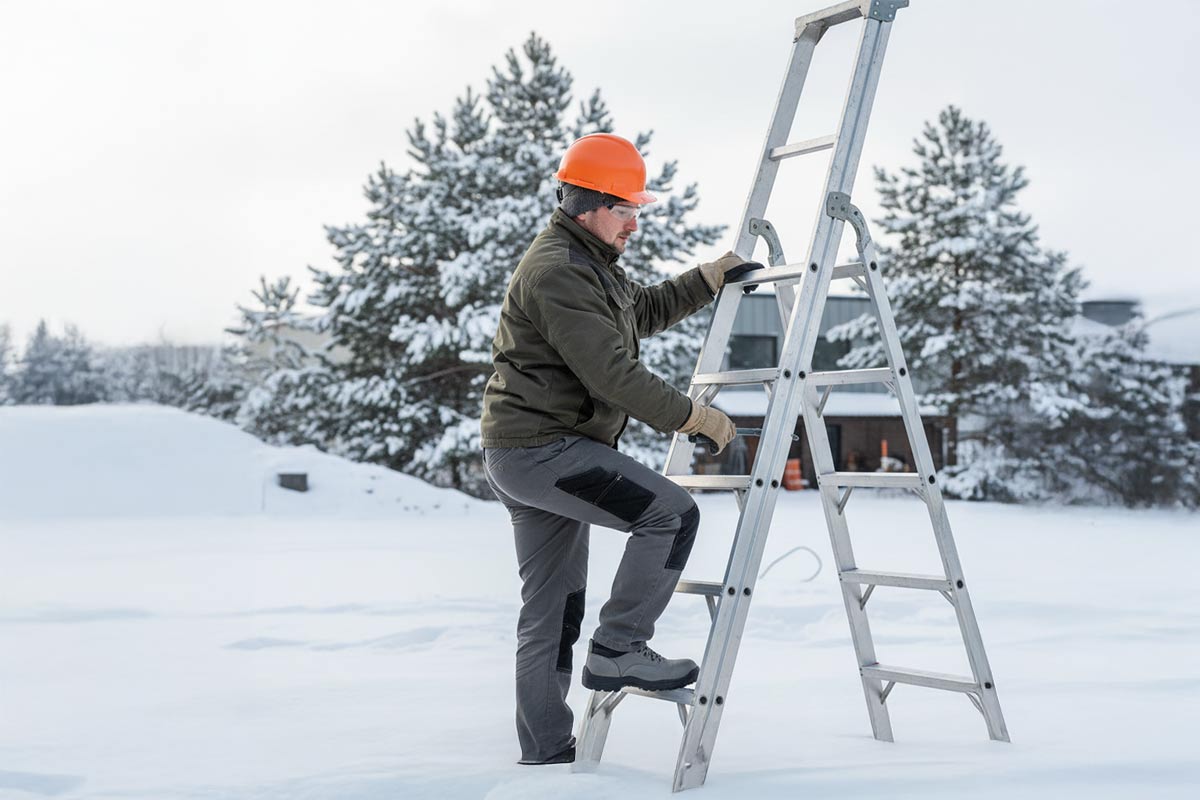
When the temperature drops and frost begins to form, even the simplest outdoor jobs can become a lot more hazardous, especially when ladders are involved.
These wintery conditions make things like climbing, balancing, and working at height significantly more risky, so, whether you’re hanging festive lights, clearing gutters, or tackling a home improvement project, understanding how to stay safe is essential.
Keep reading to discover our key ladder safety tips for the colder months, from choosing the right ladder for the job to checking for ice, maintaining grip, and preventing slips before they happen.
Safety Tips for Climbing Ladders in the Winter
To help you stay safe, here are some of our expert tips to follow before and during ladder use in the winter months:
1. Give Your Ladder a Good Inspection Before Every Use
Regardless of the weather and whether it’s the freezing winter or peak of summer, you should never mount a ladder without giving it a proper inspection.
Over time, and especially in colder months, materials can weaken or deteriorate in ways that aren’t always obvious at first glance, so look closely for cracks in the rungs or side rails, bent or warped sections, and worn or missing rubber feet that could compromise stability.
It’s also good to know that the cold weather can make aluminium ladders contract slightly and fibreglass or plastic components more brittle, increasing the risk of fractures under pressure.
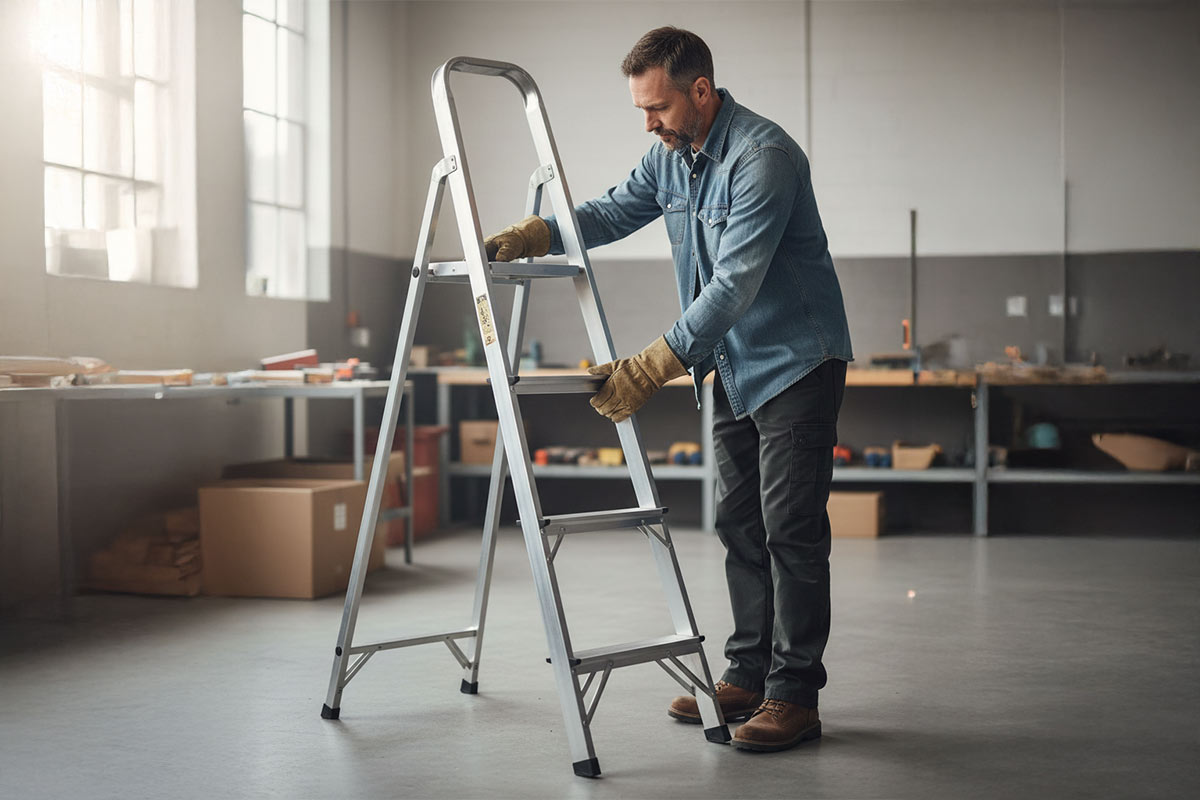
So, if your ladder has been stored outdoors or in a cold, damp area, check for signs of corrosion, rust, or moisture damage around joints, hinges, and locks.
2. Remember to Take It Slow and Not to Rush
When working outdoors in winter, it’s natural to want to finish the job quickly and get back into the warmth, but trust us, rushing is one of the biggest causes of ladder accidents.
So, take your time setting up your ladder properly, even if it means spending a few extra minutes clearing snow, checking for stability, or adjusting the angle.
3. Make Sure the Ground Is Clear and Stable
The surface beneath your ladder is just as important as the ladder itself, so before setting up, take time to carefully assess where you plan to work.
Uneven, icy, or soft ground can easily cause your ladder to shift, lean, or sink once you’re on it, leading to loss of balance or even a fall.
Ideally, use a non-slip ladder mat or base stabiliser to add friction between the ladder feet and the ground. These accessories are particularly useful on smooth outdoor surfaces like paving slabs or decking, which can become treacherous when wet or frosty.

Learn more about ladder stabilisers in this guide.
And if you’re working on grass or soft soil, use ladder safety plates or ground spikes to prevent the feet from sinking or sliding.
4. Always Maintain Three Points of Contact
One of the golden rules of ladder safety – especially in winter – is to always maintain three points of contact. By this we mean keeping two hands and one foot, or two feet and one hand, in firm contact with the ladder at all times.
Maintaining three points of contact helps distribute your weight evenly and prevents sudden shifts that can lead to slips or loss of balance. It also allows you to react more quickly if the ladder moves unexpectedly, something that’s particularly important in icy or windy conditions.
5. Avoid Carrying Heavy or Awkward Items
When climbing a ladder, balance is everything, and nothing throws off your balance faster than carrying heavy or awkward items.
This is why we recommend that carrying bulky tools, paint tins, or materials while climbing not only limits your ability to grip the ladder properly but also shifts your centre of gravity, making it much easier to lose balance or topple the ladder.
Instead, keep both hands free for climbing and use safe alternatives to move equipment. A tool belt or pouch allows you to carry smaller items securely without affecting your stability.
For larger or heavier materials, consider using a rope-and-pulley system or asking for assistance from someone on the ground.
6. Wear Footwear With a Grip
When working at height in winter, your footwear can make all the difference between a safe climb and a dangerous slip.
Even the most stable ladder won’t protect you if your shoes can’t maintain traction on the rungs, so it’s important that you always wear boots or shoes with deep, slip-resistant soles that provide firm footing, even when conditions are wet, icy, or muddy.
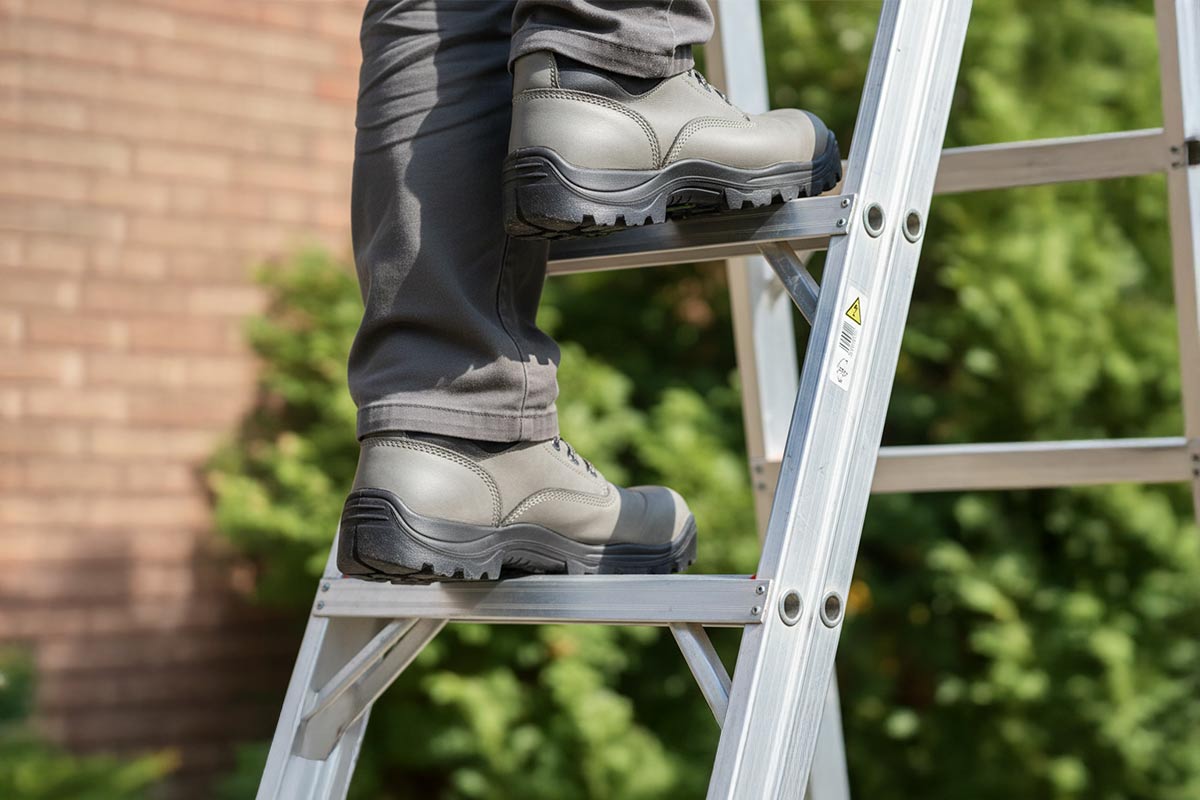
Before climbing, check your soles for snow, ice, or mud build-up, because even a thin layer can act like a lubricant and cause your foot to slide.
When Should You Never Use a Ladder?
While ladders are incredibly useful tools, there are certain situations when using one is simply not safe, no matter how quick or easy the task may seem.
Firstly, we highly recommend that you never use a ladder in strong winds or heavy rain, because these conditions can cause the ladder to shift, your hands to slip, or your balance to fail. Even light winds can destabilise a tall extension ladder, especially when you’re working at height.
You should also stay away from ladder use if the surface beneath the ladder is soft, sloped, or slippery. Setting up on mud, gravel, frozen ground, or wet decking increases the risk of the ladder slipping or sinking.
This one goes without saying but it’s important to mention nonetheless – avoid using a ladder if you’re tired, dizzy, ill, or taking medication that affects your coordination or balance. Working at height requires full focus and stability, so if you’re not feeling your best, it’s better to postpone the job.
Is It Safe to Use a Ladder in the Snow?
To put it simply, it’s not recommended to use a ladder in snowy conditions unless absolutely necessary, and even then, extreme caution is required.
Snow introduces multiple hazards that can make ladder use unsafe. For example it hides uneven ground, creates slippery surfaces, and can freeze onto ladder rungs, drastically reducing grip for both your hands and feet.
If you absolutely must use a ladder in snowy weather, the first and most important step is to prepare the area properly. Clear away as much snow and ice as possible from both the ground and the ladder’s base. You should also spread grit, sand, or salt to create a firm, non-slip surface, and always test the ladder’s stability before climbing.
How We Can Help
Looking for a reliable ladder, scaffold tower or other premium access equipment? At Ladders4Sale, we offer a range of ladders, platforms, steps, towers and accessories for all trade and do-it-yourself jobs at unbeatable low prices.
Better yet, all of our products come with lifetime support – after your initial purchase, we continue to provide ongoing support and assistance for free. In addition to this, all orders come with free shipping to mainland UK.
If you require additional advice or have a question for our team, don’t hesitate to get in contact with us using this form or via phone at 01639 849847.










Be the first to know the latest industry news and offers